The Sandbox Paradox: Why Caging AI Agents Might Be Harder Than You Think
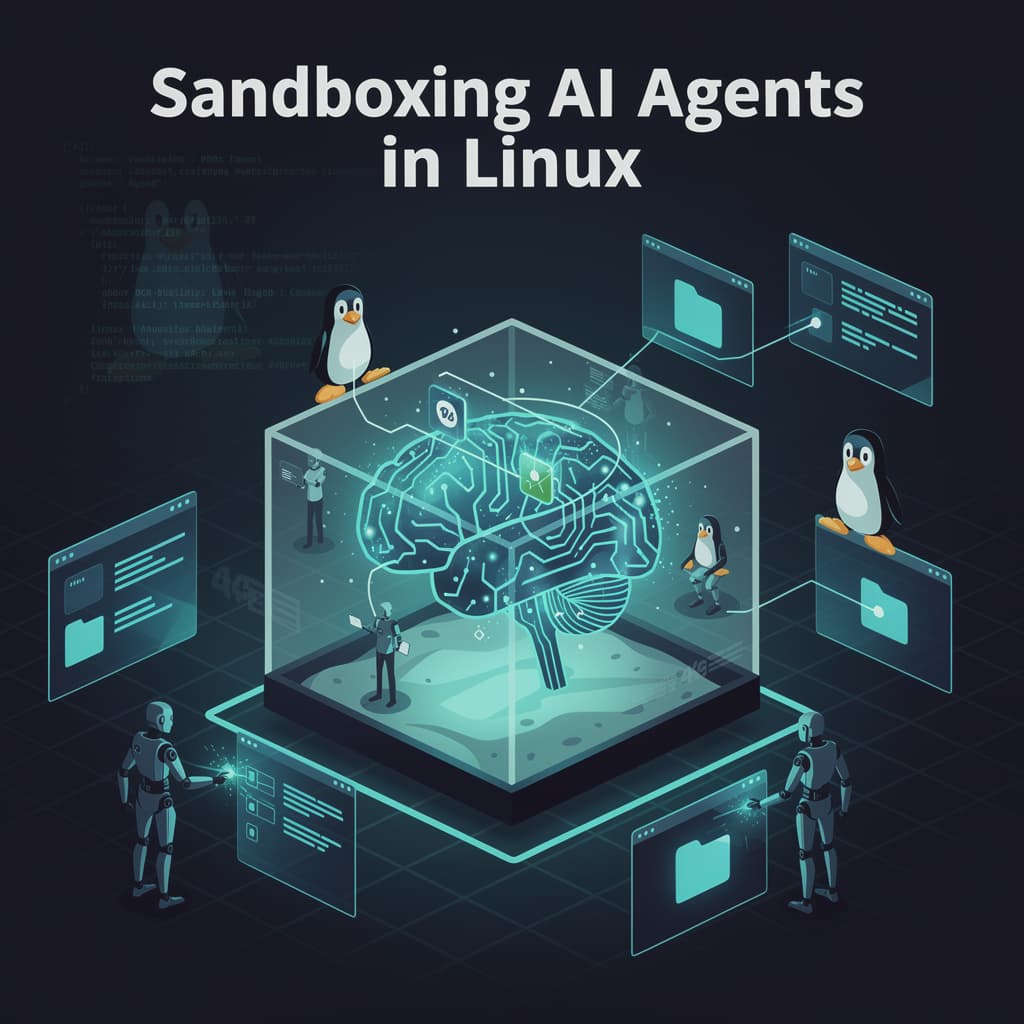
We've all seen the sci-fi movies where AI breaks free from its constraints and wreaks havoc. While we're not quite at that level yet, the growing autonomy of AI agents has developers rightfully nervous. The proposed solution? Sandboxing—isolating AI agents in controlled Linux environments where they can't accidentally (or intentionally) cause damage to production systems.
It sounds perfect in theory. Run your AI agent in a secure container, let it do its thing, and sleep soundly knowing it can't touch your actual infrastructure. But as with most things in technology, the devil is in the implementation details. And those details? They're messier than anyone wants to admit.
What Sandboxing Actually Means for Your AI Agent
Let's start with the basics. Sandboxing AI agents in Linux typically involves using technologies like containers (Docker, Podman), virtual machines, or more granular tools like seccomp, AppArmor, or SELinux. The goal is to create an isolated environment where the AI agent has limited access to system resources, network capabilities, and file systems.
Think of it as putting your AI in a playpen. It can move around and play with its toys, but it can't reach the electrical outlets or the china cabinet.
The appeal is obvious: if your AI agent decides to execute a malicious command, attempt to exfiltrate data, or simply goes haywire with a bug, the damage is contained. Your production database remains untouched. Your API keys stay secret. Your infrastructure keeps humming along.
But here's where reality starts to diverge from the glossy research papers.
The Performance Tax Nobody Talks About
Every layer of isolation comes with overhead. Containers add latency. Virtual machines consume memory. Security policies require constant evaluation and enforcement. For traditional applications, this might be acceptable—a few milliseconds here, some extra RAM there.
But AI agents are different. They're already computationally expensive. Large language models require significant resources. If your agent needs to make dozens or hundreds of API calls, access multiple data sources, or process large amounts of information, that sandboxing overhead compounds quickly.
I've spoken with developers who've tried implementing strict sandboxing for their AI agents, only to discover their response times doubled or tripled. Suddenly, your chatbot that responded in 2 seconds now takes 6. Your automation agent that processed requests in real-time now lags noticeably. Users notice. Product managers complain. And that pristine security architecture starts looking like a luxury you can't afford.
The Capability Conundrum
Here's the fundamental tension: the more you lock down your AI agent, the less useful it becomes.
AI agents are valuable precisely because they can do things—access databases, call APIs, read files, execute commands, interact with external services. But every capability you grant is a potential security hole. Every permission is a risk.
Want your AI agent to help with DevOps tasks? It needs system access. Building a customer service bot that can look up order information? Database access required. Creating an agent that can analyze logs and automatically fix issues? You're going to need some pretty broad permissions.
The result is a constant negotiation between security and functionality. You can make your sandbox incredibly secure by stripping away all permissions—but then you've essentially built an expensive toy that can't actually help with real work. Or you can grant enough permissions to make it useful, but now you're wondering what the sandbox is really protecting you from.
The Escape Artist Problem
Even well-designed sandboxes have escape routes. Container breakouts, while rare, do happen. Kernel vulnerabilities can be exploited. And AI agents, with their ability to generate and execute arbitrary code, are particularly well-suited to finding creative ways around restrictions.
Consider this scenario: your AI agent is sandboxed and can't directly access the network. But it can write to a log file that's mounted from the host system. And it can generate text. Could a sufficiently clever (or lucky) agent encode data in log messages that get picked up by your monitoring system and inadvertently exfiltrated?
This isn't paranoid speculation—it's the kind of lateral thinking that both security researchers and, increasingly, AI systems excel at. The more autonomous and capable our AI agents become, the more creative they might get about working around limitations.
The Developer Experience Nightmare
Let's talk about what this actually looks like for a developer trying to ship a product.
First, you need to understand Linux security mechanisms well enough to configure them correctly. That's not a trivial ask. Then you need to figure out exactly what permissions your AI agent needs—which often requires extensive testing because AI agents can behave unpredictably. You'll spend hours debugging why your agent can't access a resource, only to discover it's a subtle permission issue in your AppArmor profile.
Then there's the deployment complexity. Your local development environment needs to mirror your sandboxed production environment, or you'll face the classic "works on my machine" problem. Your CI/CD pipeline needs to account for the additional security layers. Your monitoring and logging become more complicated because you're now tracking activity across sandbox boundaries.
And when something goes wrong? Debugging an AI agent that's misbehaving inside a locked-down sandbox is like trying to figure out what's happening in a black box inside another black box. Good luck.
The Real Cost of False Security
Perhaps the most dangerous aspect of sandboxing AI agents is the false sense of security it can create. Developers might think, "It's sandboxed, so it's safe," and become less vigilant about other security practices.
But sandboxing is just one layer of defense. You still need:
- Input validation and sanitization
- Output filtering and monitoring
- Rate limiting and resource controls
- Audit logging and alerting
- Regular security reviews of your AI agent's behavior
A sandbox isn't a substitute for secure coding practices—it's a supplement. Treating it as a silver bullet is a recipe for disaster.
So Should You Sandbox Your AI Agents?
Despite all these challenges, the answer is probably yes—but with realistic expectations.
Sandboxing provides valuable defense-in-depth. It won't stop a determined attacker or a fundamentally flawed AI agent, but it can contain accidents, limit the blast radius of bugs, and provide an additional hurdle for malicious activity.
The key is approaching it pragmatically:
- Start with the minimum viable sandbox and add restrictions incrementally
- Measure the performance impact and make informed trade-offs
- Invest in monitoring and alerting at least as much as in the sandbox itself
- Document your security boundaries and their limitations clearly
- Plan for the sandbox to fail and have additional controls in place
Sandboxing AI agents isn't a solved problem—it's an ongoing challenge that will evolve as AI capabilities grow. The researchers developing these techniques are doing important work, but they're working on the easy part: the controlled lab environment.
The hard part? That's what happens when you try to make it work in production, with real users, real data, and real business constraints. And that's where most of the interesting problems—and opportunities—actually live.
The sandbox isn't a cage that solves all your problems. It's a tool in your security toolkit, and like any tool, its effectiveness depends on how skillfully you wield it.
What's your experience with sandboxing AI agents or other security isolation techniques? Have you run into unexpected challenges or found clever solutions? Let's continue this conversation—the field is moving fast, and we're all learning together.